




Iron acetate is well known among woodworkers for ebonizing wood, allowing them to obtain dark shades ranging from deep gray to ebony black.
However, digging a little deeper, it turns out that iron acetate has other applications. In dyeing, for example, it can be used as a mordant (as a substitute for iron sulfate), meaning a fixative for natural dyes. In this case, it darkens the colors while making them more resistant to UV light.
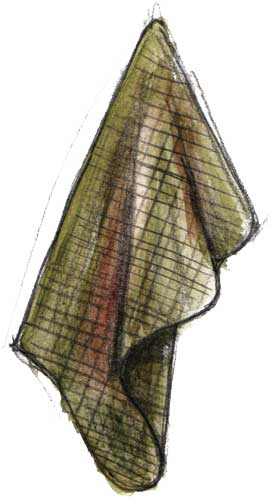
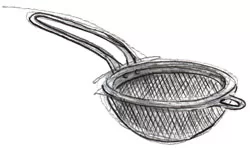
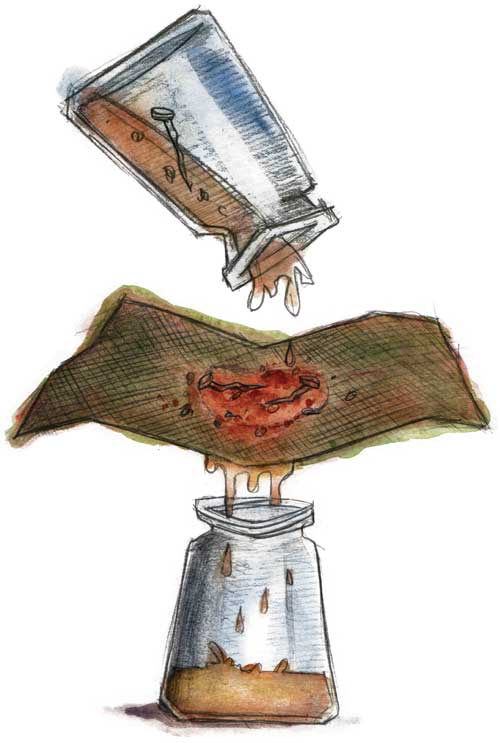
I have personally used iron acetate to paint backgrounds for my artworks in order to create a rust-like effect. I used the iron acetate before filtering it (step 5 of the recipe), meaning while it still contained pieces of metal, which I then ground in a mortar. I then mixed everything with egg yolk, which acted as a binder. I waited a few days, misting the surface with a spray bottle 2 to 3 times a day, until I achieved the desired result.
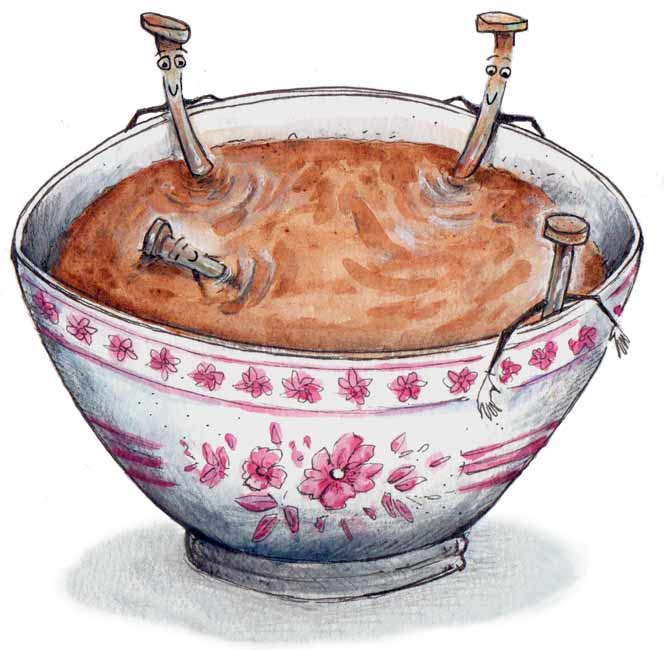
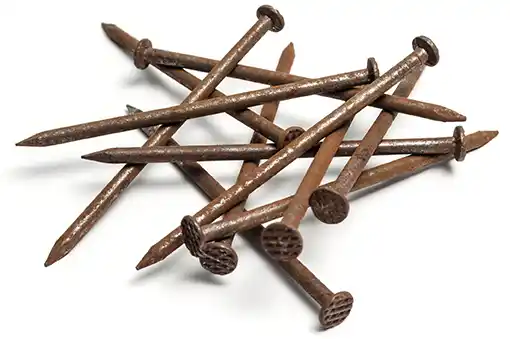
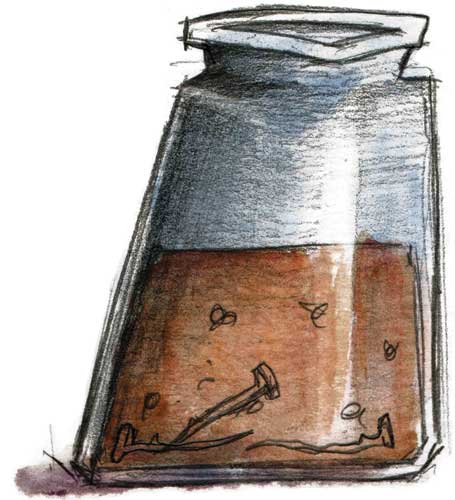
This recipe, also known as “nail soup,” is very simple to make. It requires only two ingredients that are easy to find: vinegar and one or more iron objects.

Iron acetate can be irritating, so be sure to wear gloves, a mask, and safety goggles when handling it.Iron acetate stains, so I also recommend wearing an apron.
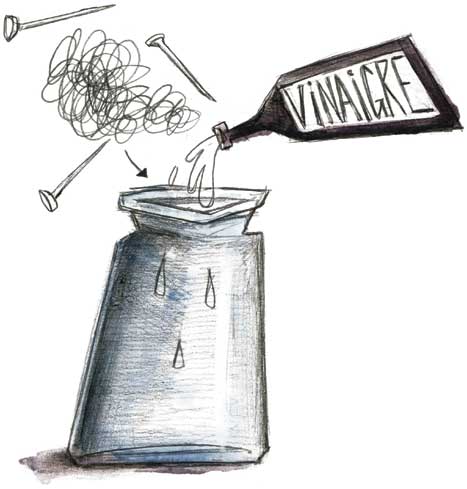
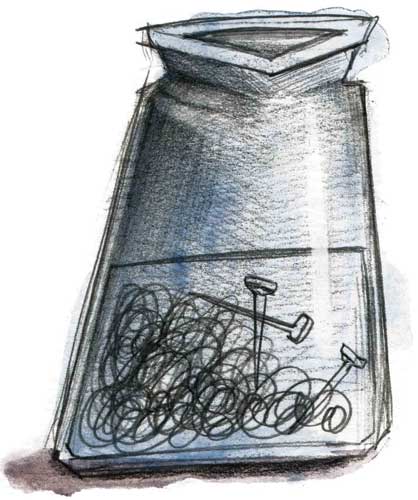
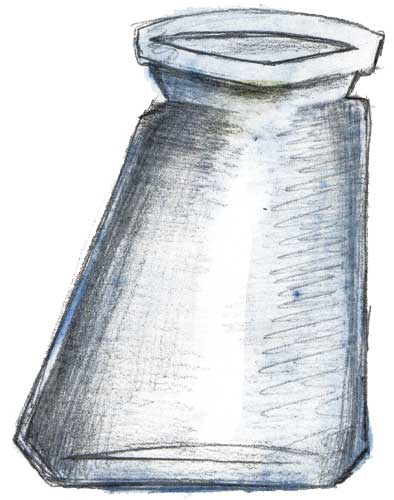
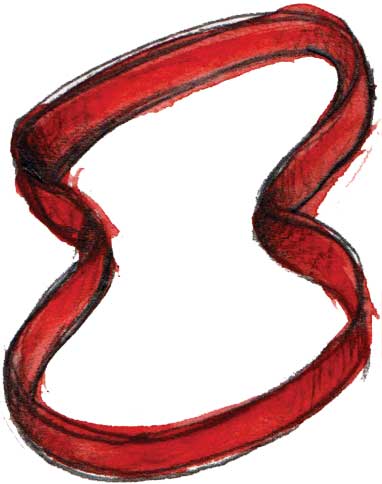
You can secure it with a rubber band or string so that it does not fall off.
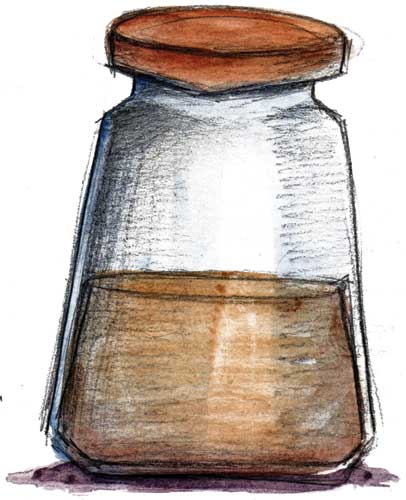
Do not use an airtight lid under any circumstances, as gases will form and could cause the jar to burst or splash you when opening it.
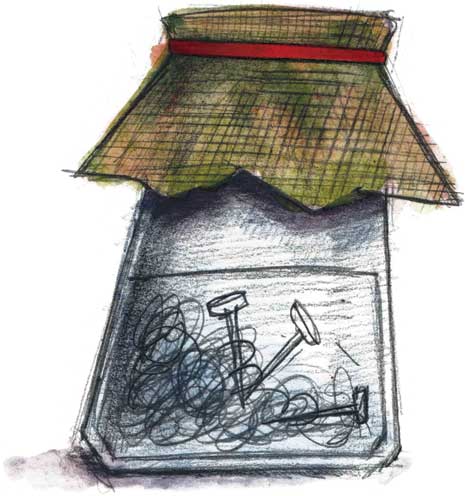
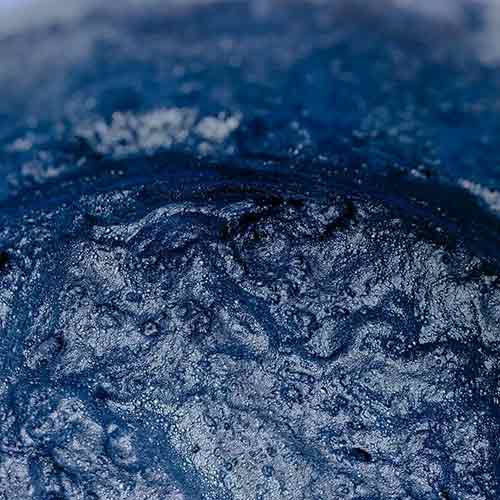
After a few days, the liquid will take on a rust-colored tint, sometimes accompanied by foam of a similar color.
The reaction time may vary depending on the type of object used: steel wool will react faster than larger objects.
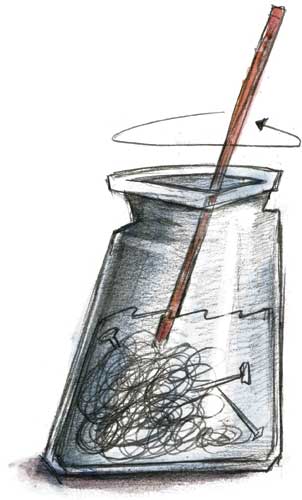
If necessary, let it macerate longer.
The vinegar gradually dissolves the iron objects. If you want a more concentrated solution, add more objects or let some of the vinegar evaporate.
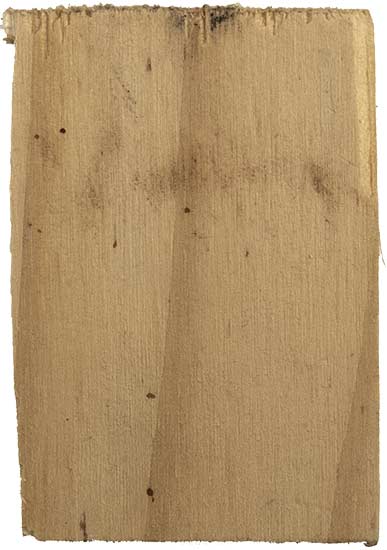
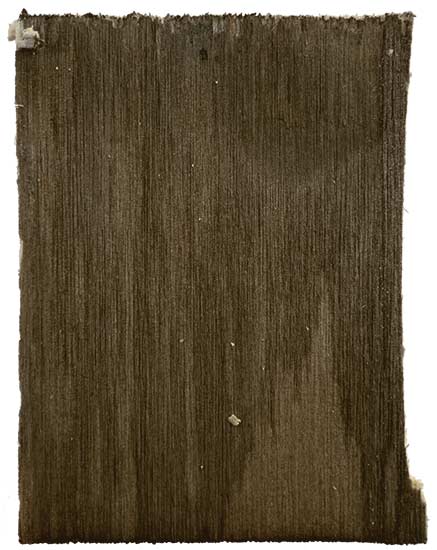
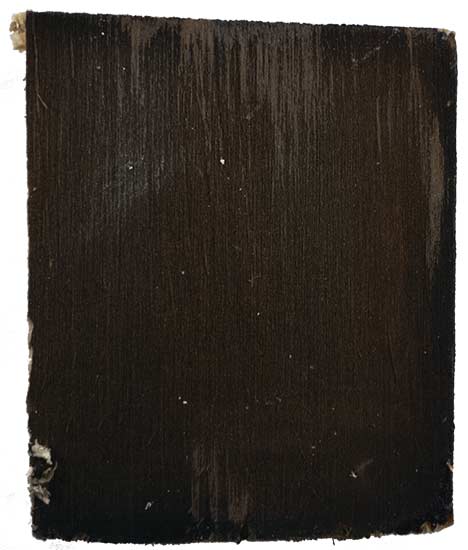
Here is an example of wood on which I applied iron acetate. This is just an example, as the result can vary depending on several factors.
Iron acetate reacts with the tannins naturally present in the wood, causing its color to darken. The more tannins the wood contains, the darker the resulting shade will be.
But (because there is always a “but”), the final result also depends greatly on the wood species, whether it has been treated or not, its porosity, the concentration of the iron acetate, the number of coats applied, and the reaction time. All of these elements together determine the final appearance of the wood.