




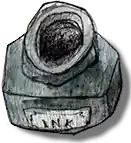
This ink was already known to the Egyptians as early as 2,500 BC. In Europe, it was not until the Middle Ages that iron gall ink became widespread and the preferred writing medium for eight centuries. It is valued because it is simple to make and remarkably stable: ancient manuscripts written with this ink have retained all the intensity of their black. In France, it remained the only ink in use until around 1850. Artists used it particularly for line work and washes, alongside bistre, sepia, and later India ink, which is much more viscous. Indelible and highly fluid, it became standard for official documents, to the point of being nicknamed “civil registry ink” in the 19th century.
This is not India ink. It is an iron gall-tannate ink, also known as iron gall ink or metallo-gallic ink. It is made from ferrous sulfate and plant-based tannins, whereas India ink is produced from “lampblack,” a pigment created by the incomplete combustion of resinous wood or other carbon-rich organic materials.

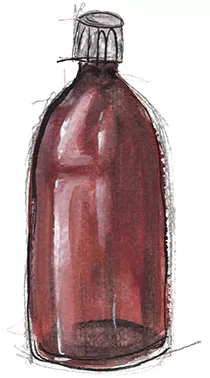
Preferably tinted

Bowl type
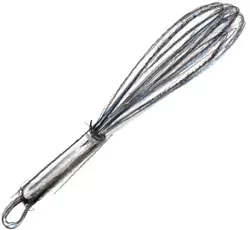
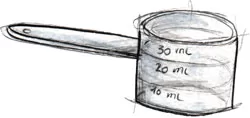
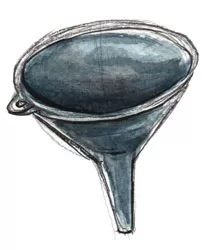
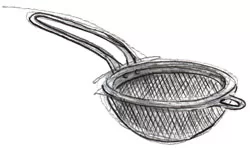
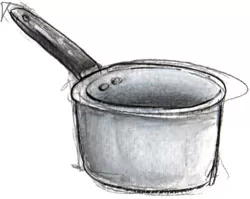
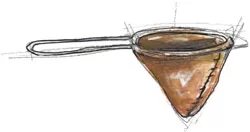
Or a fine cloth
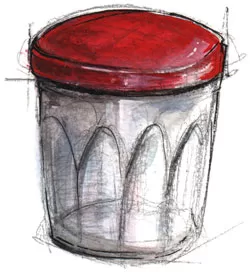
Jam jar type
Note: The products marked with the “🛒” symbol are affiliate links. If you purchase through these links, I receive a small commission that helps support this blog, at no extra cost to you.
If the gall nuts are too hard, wrap them in an old cloth you no longer use and hit them with a hammer to break them up roughly before putting them in the mortar. You can also use an electric coffee grinder.
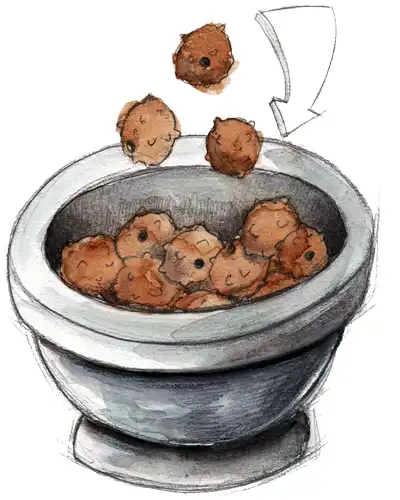
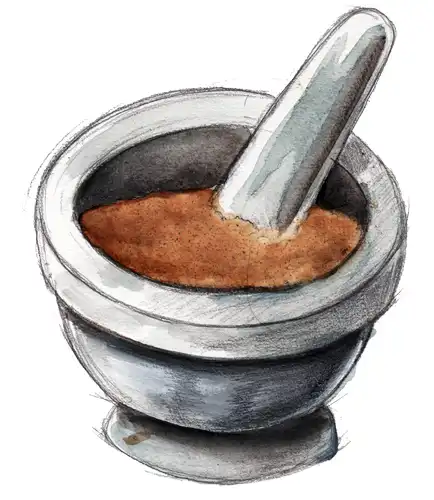
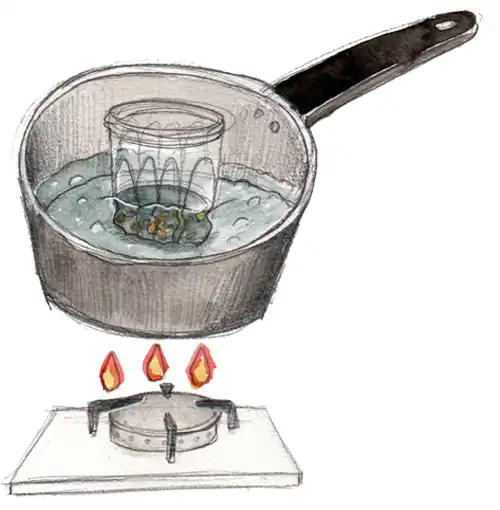
Ensure the water does not evaporate completely and add more if necessary.
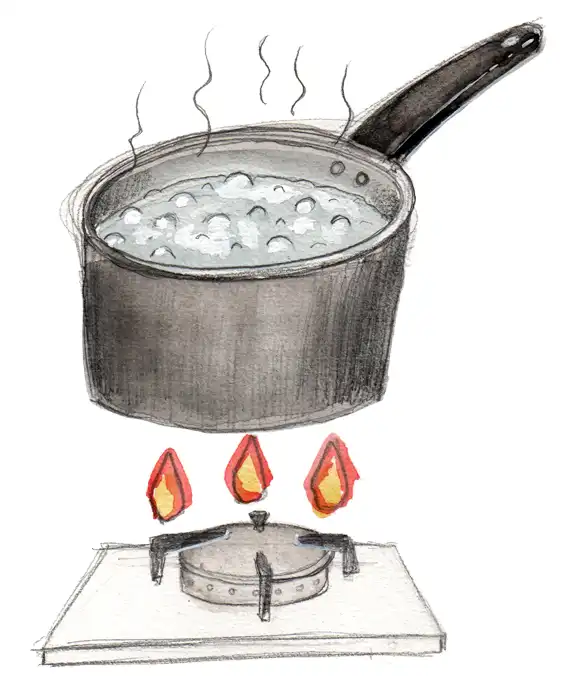
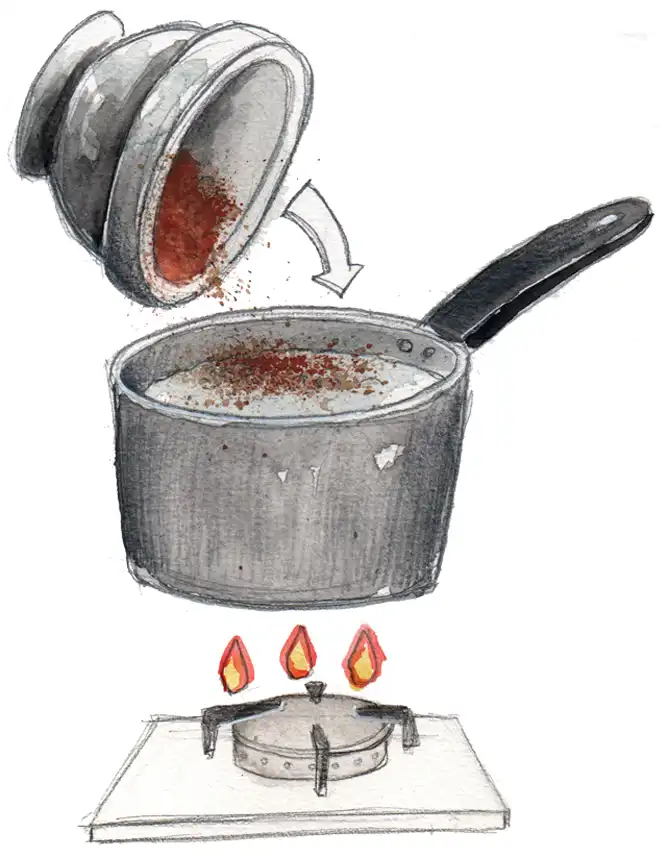
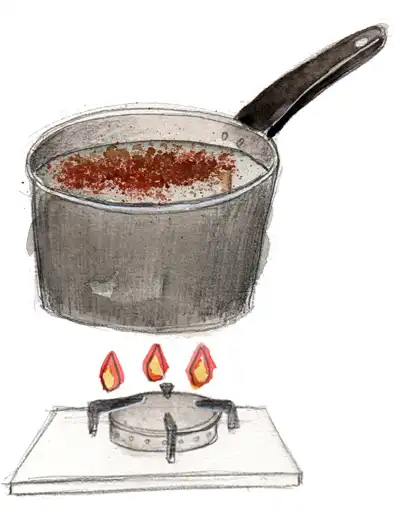
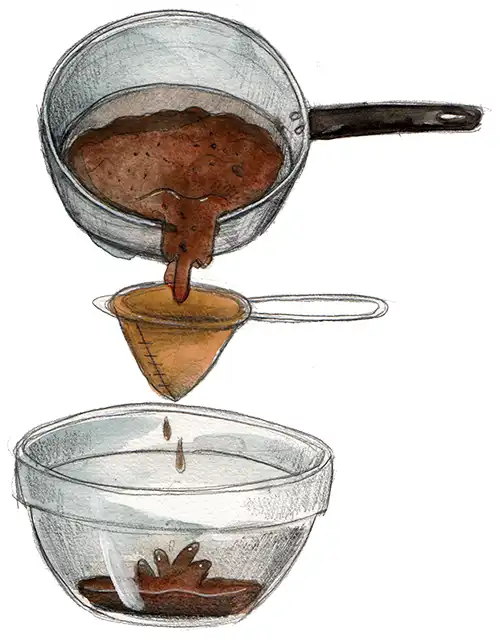
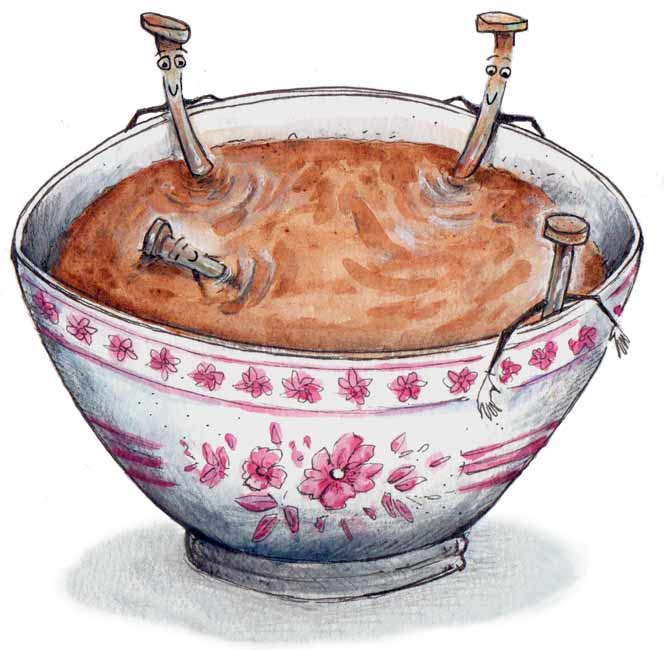
Avoid mixing with an iron object.
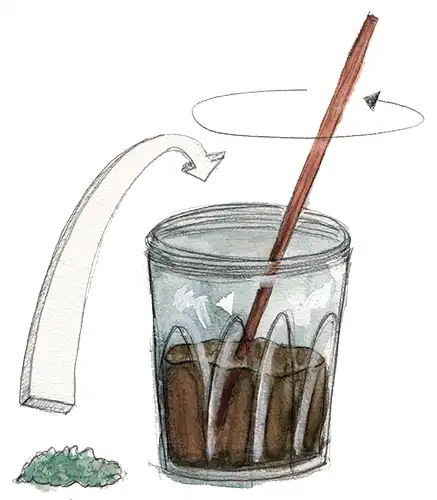
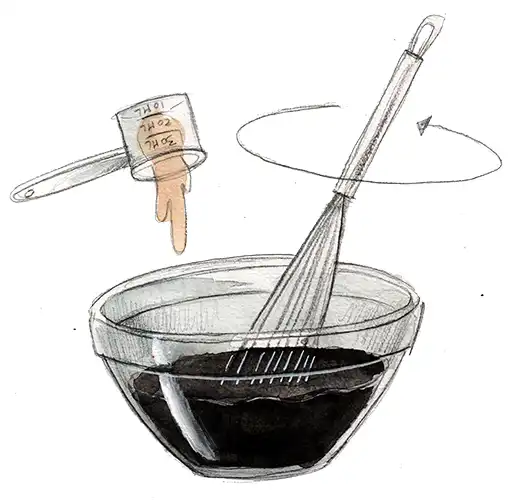
When it comes into contact with ferrous sulfate, the gall nut juice will darken.
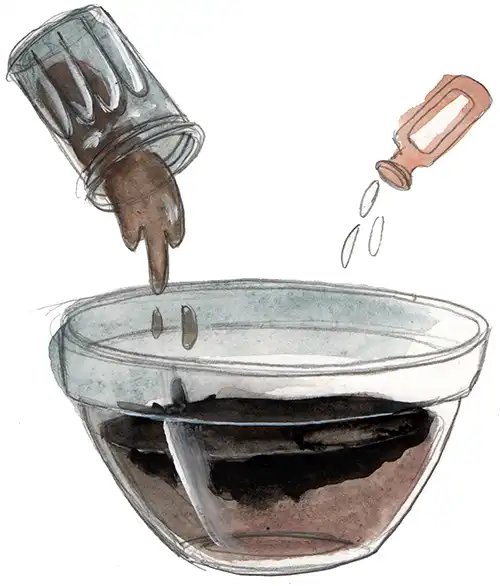
If you already have ready-made liquid gum arabic, skip this step.
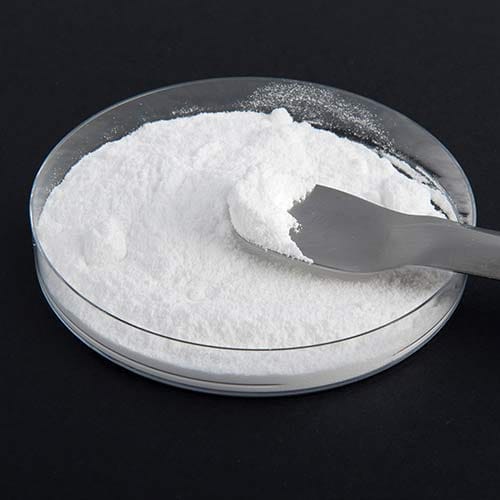
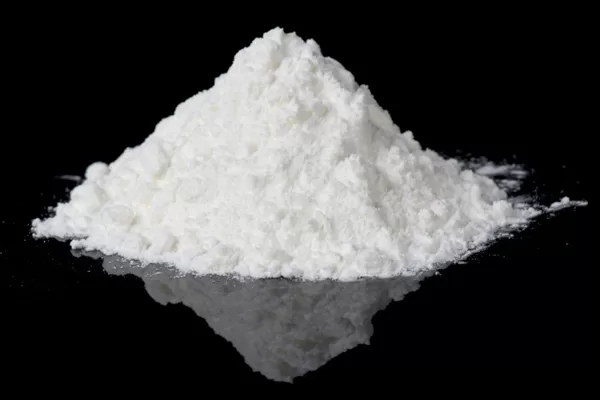
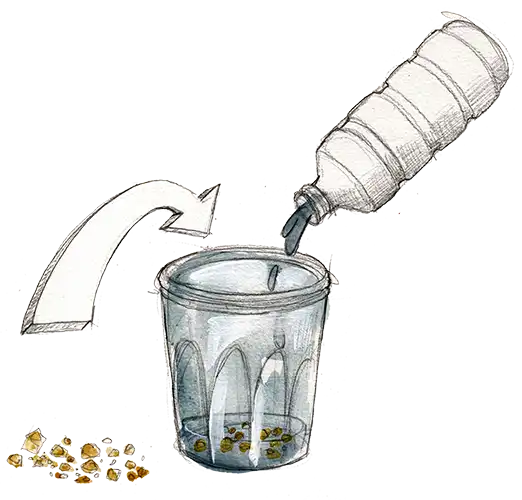
However, if you have chosen gum arabic in grain (crystal) or powder form, you must prepare your gum water.
You now have gum water.
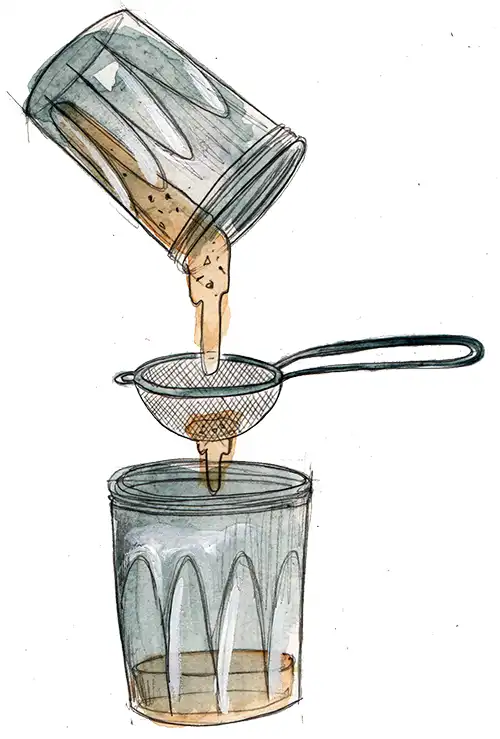
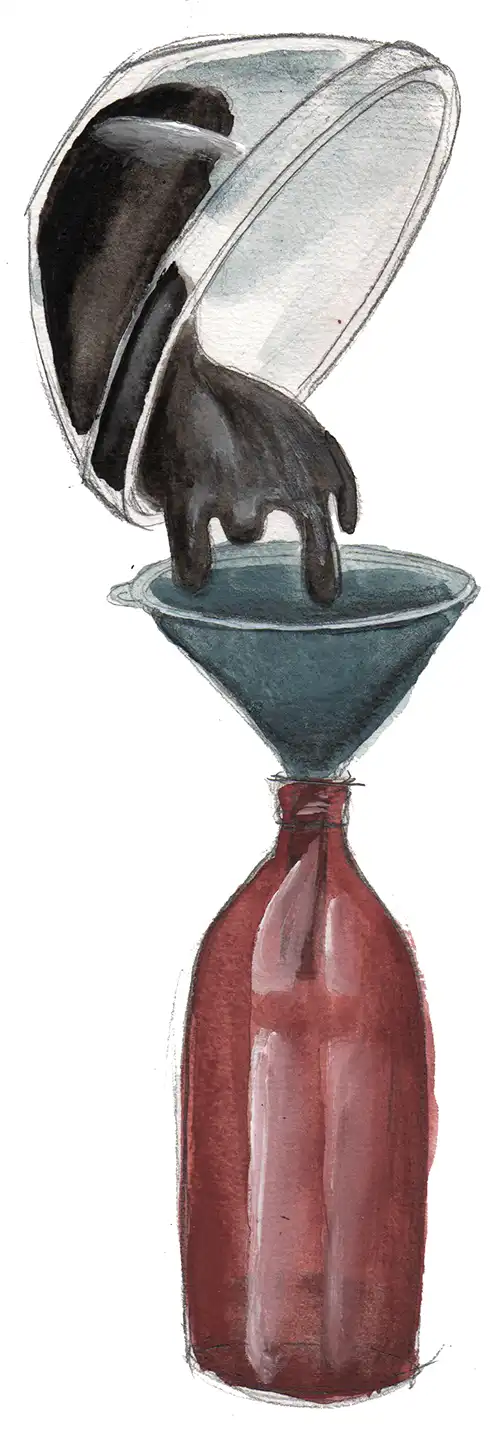
This time allows the iron to oxidize properly when exposed to air, which makes the ink blacker.