




Home » Woad Blue
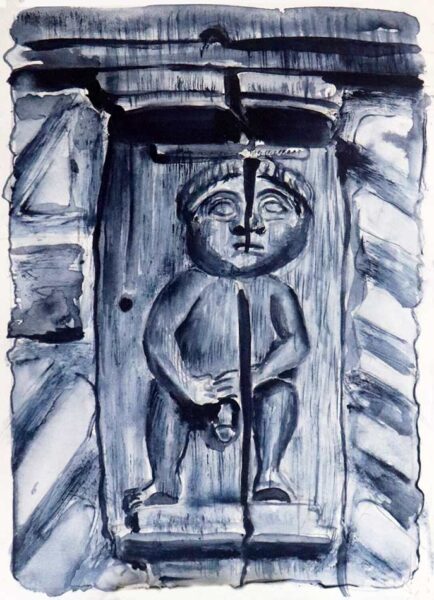
Excerpt from my travel journal
Around the mid-15th century and up to the mid-16th century, a plant made the fortune of several Toulouse merchants. In the Lauragais region, this plant is called pastel; in other regions, it is known as woad, sometimes wède or even weide. All these names refer to the same herbaceous plant: Isatis tinctoria.
Absolutely ordinary in appearance, it holds a unique secret: it can permanently dye fabrics blue. In Europe, it was long the only plant capable of such a feat. Visionary merchants saw the full commercial potential of woad and quickly made colossal fortunes, fortunes so immense that they transformed Toulouse’s architecture with gigantic and luxurious mansions, some of which are still part of the city’s landscape.
When I decided to throw myself wholeheartedly (let’s not mince words) into making my own natural paints, the question of obtaining blue quickly arose. Of all colors, blue is, without a doubt, the rarest in nature, whether in mineral or plant form. Although I lived in Toulouse at the time, and the history of the woad plant is relatively well-known there, I didn’t immediately think of it first. It was after some internet research that I remembered its existence.
Determined to find it, I set out in search of the pigment obtained from this plant. Convinced that it would be easy, I quickly became disillusioned. The few places dedicated to the plant in Toulouse were unable to supply me (their harvest barely meets the needs of their own production). Far from wanting to give up, I decided to travel through the towns and villages where the plant was cultivated during its golden age. Perhaps I would have more luck then. This is how my journey through the Land of Cockaigne began, in search of pastel blue. I kept traces of these wanderings in my sketchbooks.

Excerpt from my travel journal
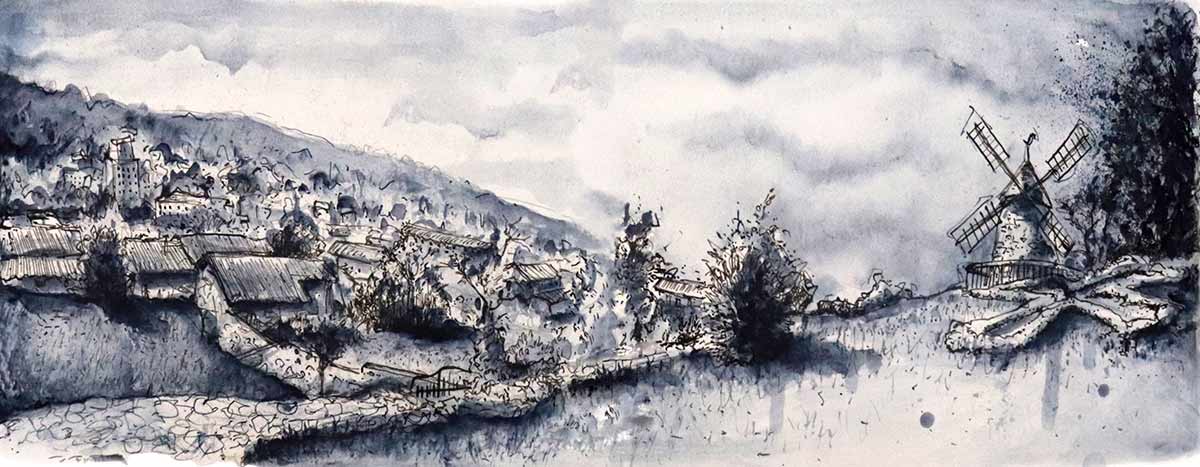
Excerpt from my travel journal
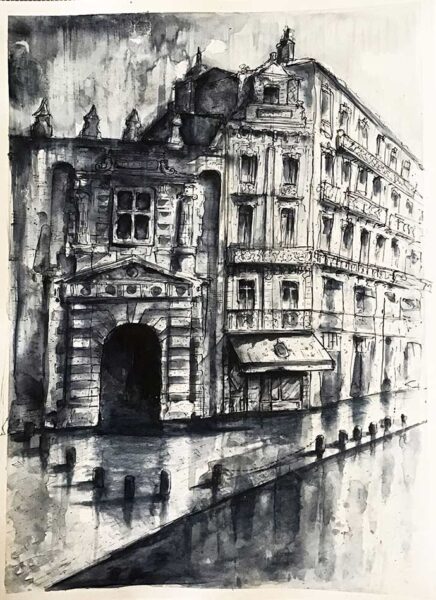
Excerpt from my travel journal
Very quickly, my notebooks filled up, and not just with sketches and drawings, but also with anecdotes about the plant. I met passionate people who changed my initial project, which was merely to find blue pigment and settle down to draw interesting places. Now that I had more and more content, it seemed obvious that I should make a book out of it.
I’ll be frank, I didn’t know what I was getting into. Today, Monday, April 6, 2026, the book is 90% complete, but the last 10 percent are the most difficult. I’m giving myself until the summer school holidays to finish it.
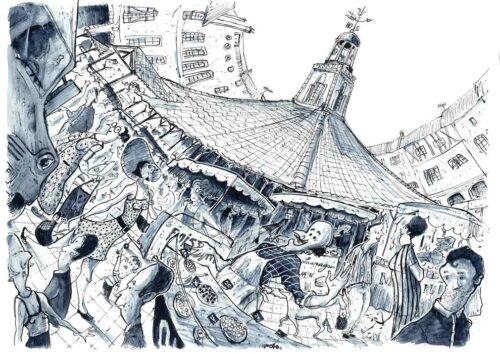
Excerpt from my travel journal