

Here’s a somewhat surprising fact (at least for me, before I asked myself the question): many paints contain ingredients derived from animal exploitation, and watercolors are no exception.
These ingredients have been used for centuries because they give paints specific properties.
Here’s where you can find them.
To put it simply, the binder helps pigments adhere to the surface. Without it, the paint simply can’t set.
Among the non-vegan ingredients most commonly found in watercolor binder are:
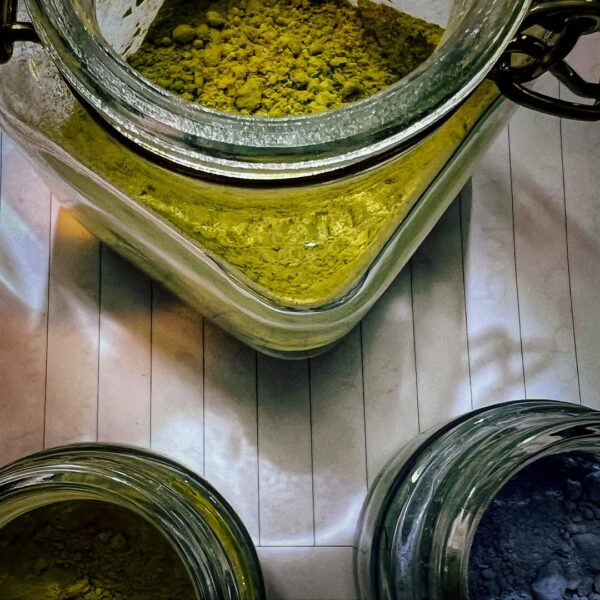
Aside from binders, some pigments are also directly derived from animals or animal exploitation. These include:
And the topic doesn’t end there, as animal gelatin is very often used to size watercolor paper, meaning that even the surface may not be vegan!
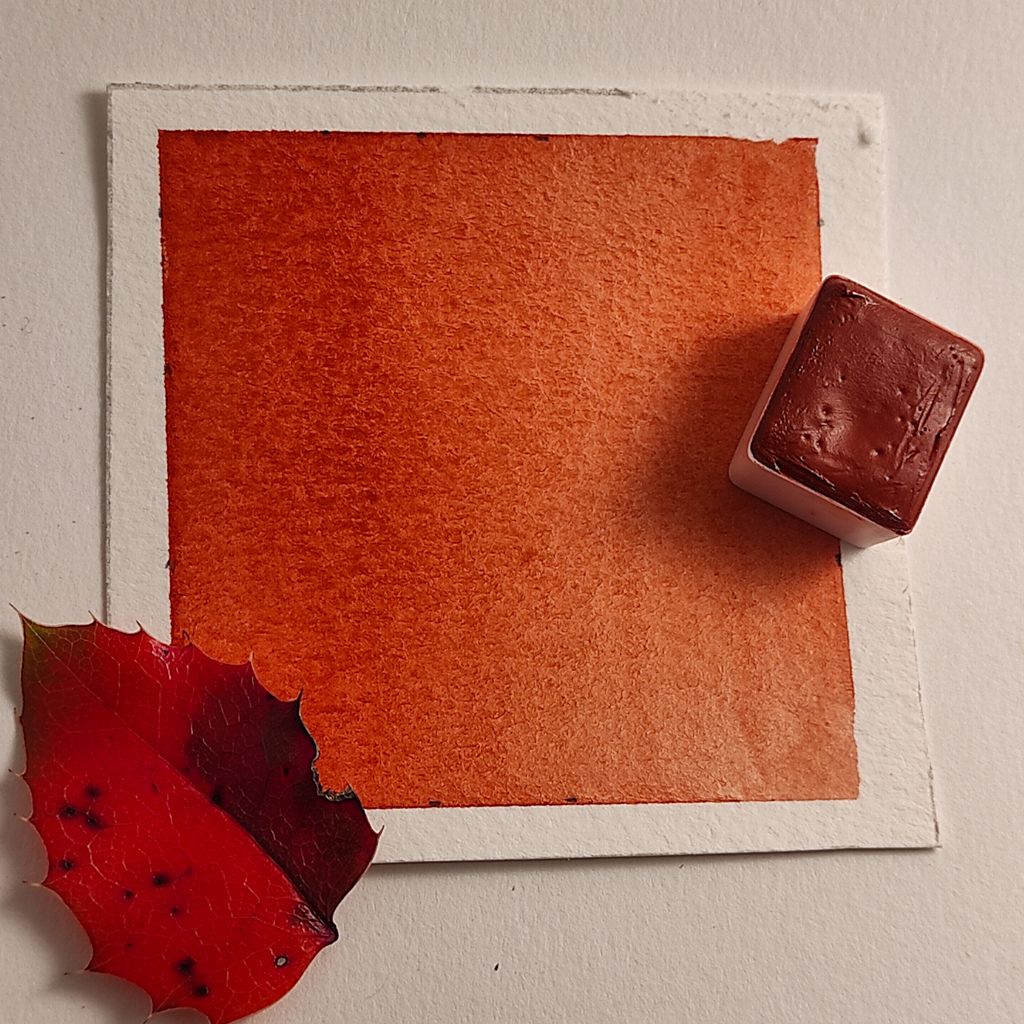
Without claiming to be something I’m not (vegan, in this case), the subject interests me, and I set out to find ingredients capable of replacing those usually used in watercolors, without affecting their characteristics.
I discovered a method that produces excellent quality watercolors.
This recipe mainly covers how to prepare a vegan binder. For pigments, I’ll point you to other articles where I explain how to turn plants into pigments, or I’d suggest turning to mineral or synthetic pigments instead. As for paper, there are certified vegan options available.


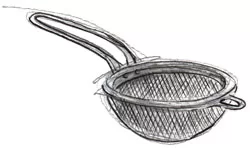

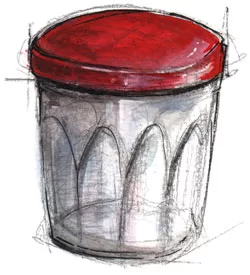
Jam jar type

If you don't have one, you can use a palette knife.
Note: the products above marked with the symbol “  ” link to affiliate links. If you buy through these links, I receive a small commission that helps me maintain this blog, at no extra cost to you.
If you don't have paint pans, no worries. Use an ice cube tray! Some artists use acorn caps, others use seashells. The most important thing is to use something that won't rust. Otherwise, your watercolors could become dull, or even unusable.

This recipe is based on what I call the classic recipe. Every artisan will have their own method; therefore, it’s entirely possible that you’ll find different proportions online or in books.
Your tools, jars, and bottle must be thoroughly cleaned to avoid any risk of mold later on.
Here are the proportions for 100 g of binder:
If you already have liquid gum arabic, skip directly to the next step.
However, if you have chosen powdered gum arabic or gum arabic in grain (or crystal) form, you will need to prepare your gum water.
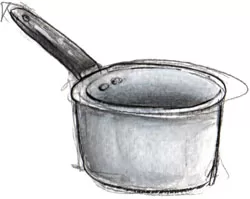
Glucose syrup is very thick. Pour 20 g of glucose syrup into a jar, then heat it quickly in a double boiler. Within a few seconds, it will soften. Let it cool. Pour the preparation into a new jar.
Before assembling your binder, make sure all ingredients have cooled.
Your 100% vegan binder is ready!
Glycerin is a drying retardant but also a plasticizer. It helps prevent your watercolors from cracking. Be careful not to add too much, or your watercolors might take weeks to dry.
Your binder can be stored for several months in a dry place away from light.