


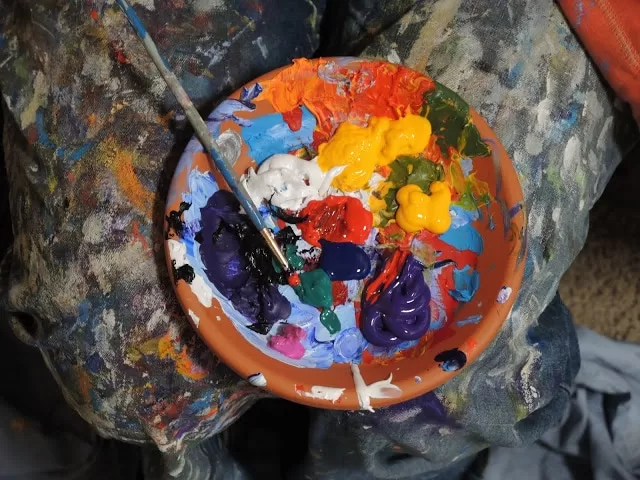
The name “gouache” was given to this paint in the 16th century. Its name is derived from the Italian “guazzo”.
Gouache is an opaque, covering water-based paint. Like watercolors, it can be reworked even several years after drying. It’s “the paint” used at school, especially because it’s so easy to use.
Its composition is very close to that of watercolors, but it stands out for one particularity: it’s opaque! Unlike watercolors, which play with transparency and let the white of the paper show through for highlights, gouache, on the other hand, requires the addition of actual white to create luminous touches.
It is generally sold in paste form, either in tubes or pots, or in solid form, as pans.

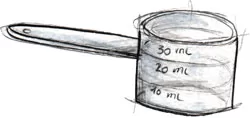
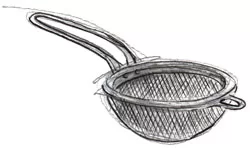

If you don’t have one, you can use a spatula or a painting knife.
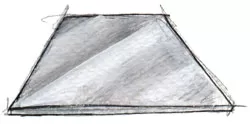
Or a marble plaque
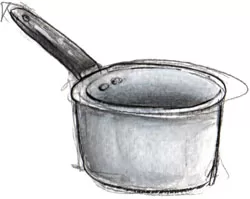
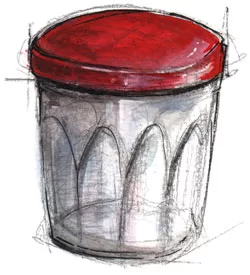
Jam jar type
Note: the products above marked with the symbol “  ” link to affiliate links. If you buy through these links, I receive a small commission that helps me maintain this blog, at no extra cost to you.

All paints are essentially made up of pigments mixed with a binder, and gouache is no exception. The role of the binder is to ensure the paint adheres to the surface. This step is therefore crucial, as it will greatly influence the final quality of your gouaches.
If you have liquid gum arabic, skip directly to the next step.
On the other hand, if you have chosen gum arabic in the form of grains (or crystals), you must prepare your gummed water.
If you made your own gum water, add a few drops of clove essential oil (1 drop per 20 ml or 20 g) to preserve your binder longer.
You should know that glycerin is a drying retarder, but also a plasticizer. It helps prevent your gouache from cracking as it hardens and also makes it a bit more flexible. Be careful not to add too much, otherwise your gouaches may take weeks to dry.
Your binder is ready!
I don’t give exact proportions for the ingredients in the recipe because it depends on the amount of gouache you want to make.
Just so you know, to make a “classic” gouache pan, you’ll need about 15 g of pigment (the equivalent of a tablespoon), mixed with 15 g of binder.
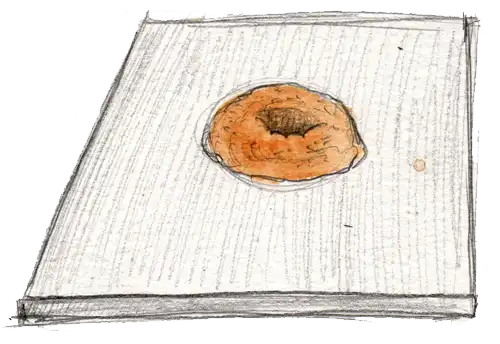
I generally mix 1 part pigment with 1 part binder, but this can vary depending on the nature of the pigment.
Add it gradually. If you add too little binder, it will be difficult to get a homogeneous paste.
Each pigment reacts differently; it will be up to you to determine the necessary amount of binder to add.
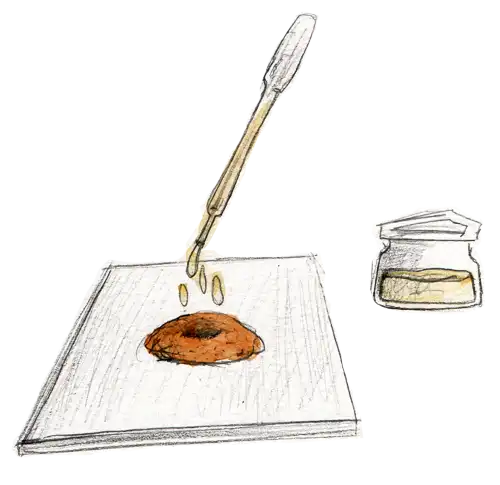
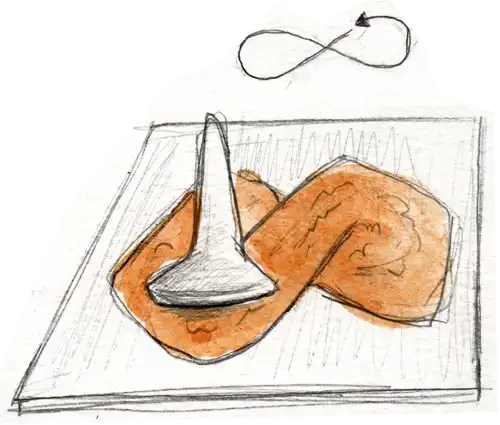
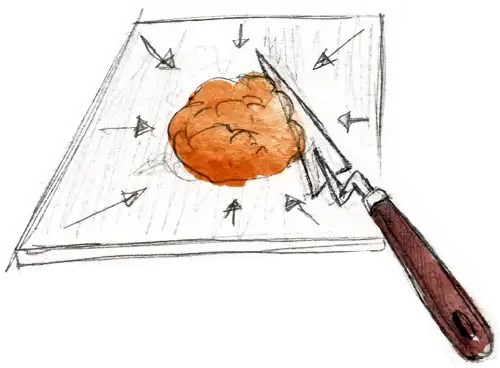
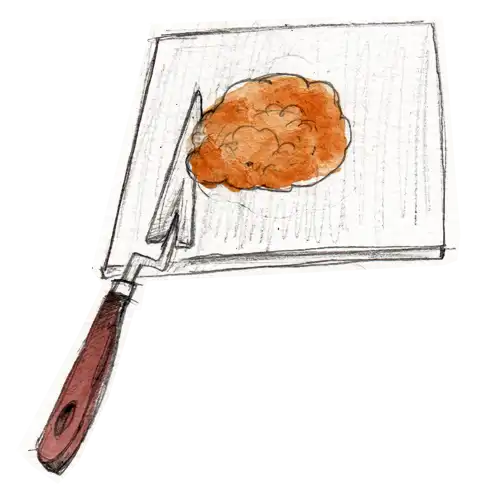
If you are using the muller, place it on the pigments and binder and begin making circular movements, applying a little pressure, to mix them well. A type of paste will form. Bring it back to the center with the spatula. Repeat this process several times.
If you use a spatula, crush the pigment and binder together until a paste forms. Spread it by pressing firmly with the spatula, then gather it back to the center and crush it again. Repeat until the mixture is completely homogeneous.
Keep going at least until you can no longer hear the pigment “squeak” under the muller or spatula.
Some pigments require more work than others. The more time you spend on this step, the finer your gouache will be.
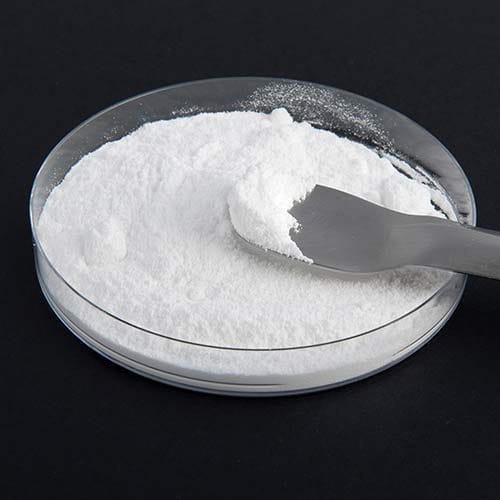
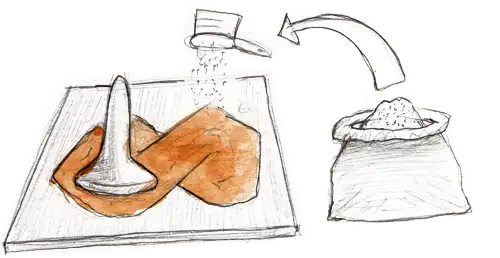
Test as you go until you achieve the desired opacity. However, keep in mind that the more calcium carbonate you add, the more pastel your gouache will become.
If you choose to store them in solid form, let them dry; it will only take a few days.
If you prefer them as a paste, use one or more airtight jars and check regularly that there isn’t too much mold.
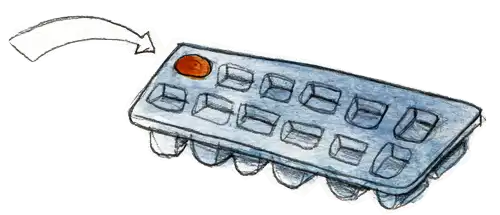
Your gouaches are ready. You can use them right away, or let them dry and reactivate them later with a wet brush.