

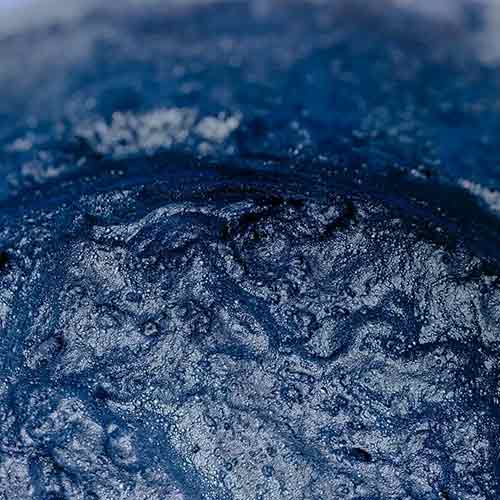
The name “indigo” refers to an organic substance extracted from indigo plants that, after various chemical processes, produces the famous indigo blue.
Indigo plants do not naturally contain a blue pigment as such, but rather colorless precursors: indican in species like Indigofera tinctoria or Persicaria tinctoria, and isatan in Isatis tinctoria. These compounds must then be transformed, notably through hydrolysis and oxidation, to produce the blue pigment, indigotin.
There are about a hundred indigo shrubs and plants, but only about ten are truly suitable for pigment extraction.
Before chemists, especially those of the 19th century, took over the production of blue pigments, this color was rare in its natural state. Although mineral pigments such as lapis lazuli were already known, they were difficult to obtain and were located in a few restricted regions of the planet, particularly in Afghanistan, making them rare and extremely expensive pigments. It is therefore mainly thanks to the mastery of the extraction of dyes from indigo plants that this color became available.
The first traces of indigo cultivation date back to about 4,000 BC in India. The Mesopotamians and Egyptians of antiquity also mastered the cultivation of this plant, as traces have been discovered dating back to around 2,500 BC. The first appearance of indigo in a book dates back to 77 AD in the book “De materia medica” written by the Greek physician, pharmacologist and botanist Dioscorides. The Maya of pre-Columbian America used indigo by mixing it with palygorskite clay to obtain a blue close to primary blue, called “Mayan blue.”
In Europe, it is another indigo plant that made the fortune of many traders, especially in Toulouse and its surroundings: Isatis tinctoria, better known as woad. Initially, this plant was not classified in the indigo family, but research has proven that its components are the same as those found in other plants in this family.
When they arrived in Asia in the sixteenth century, the Portuguese discovered that indigo was also present and that it was sold on the markets in powder form.


Among the ten plants/shrubs that can be used to extract the indigo pigment, three stand out in particular:

Undoubtedly the most famous indigo plant, it is also known as dyers’ indigo. Native to India, it is known for producing the highest yields of indigo pigment.
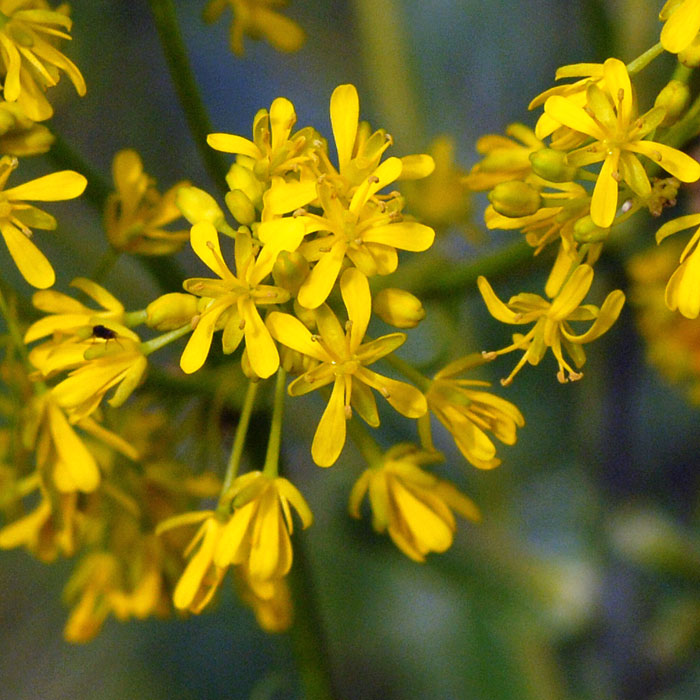
Known as woad, this plant made the fortune of some merchants in the Lauragais. Its color was exported across Europe before the massive importation of indigo from India and the Americas.

Also known as dyer's knotweed, it is native to East Asia. This plant has acclimatized very well to the harsher climate of Europe, unlike its close relative, Indigofera tinctoria.


Avoid iron and oxidized tools.

Minimum 3 liters

If you don't have one, you can use a palette knife.
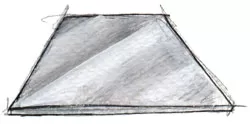
Or a marble plaque

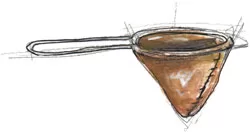
Bigger than the opening of the container!

It must be more than 2 liters
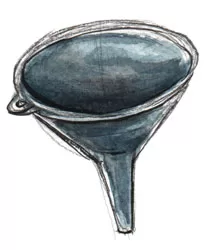


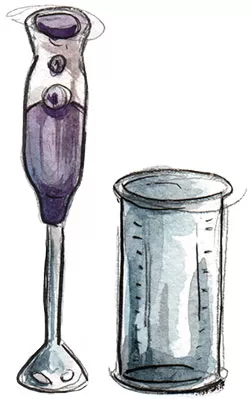
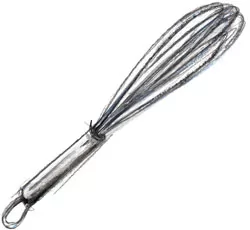
Note: The utensils above with the symbol “🛒” link to affiliate links. If you purchase through these links, I receive a small commission that helps support this blog, at no extra cost to you.
This lid will limit the contact of the air with the preparation, thus reducing the risk of oxidation occurring too quickly.
Ox gall is not compulsory, but it makes the work much easier.
At this stage, it is important to limit the contact of the air with the mixture.
You get a slightly yellow/green solution.
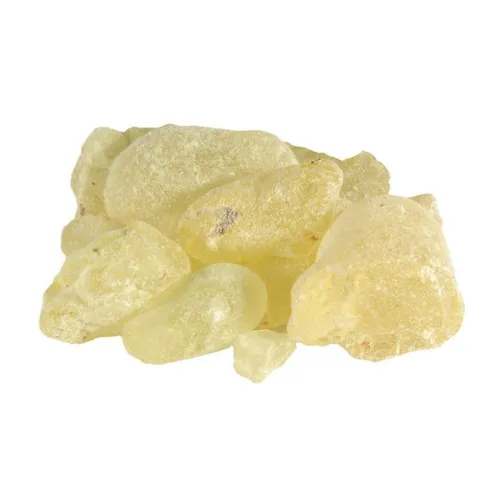
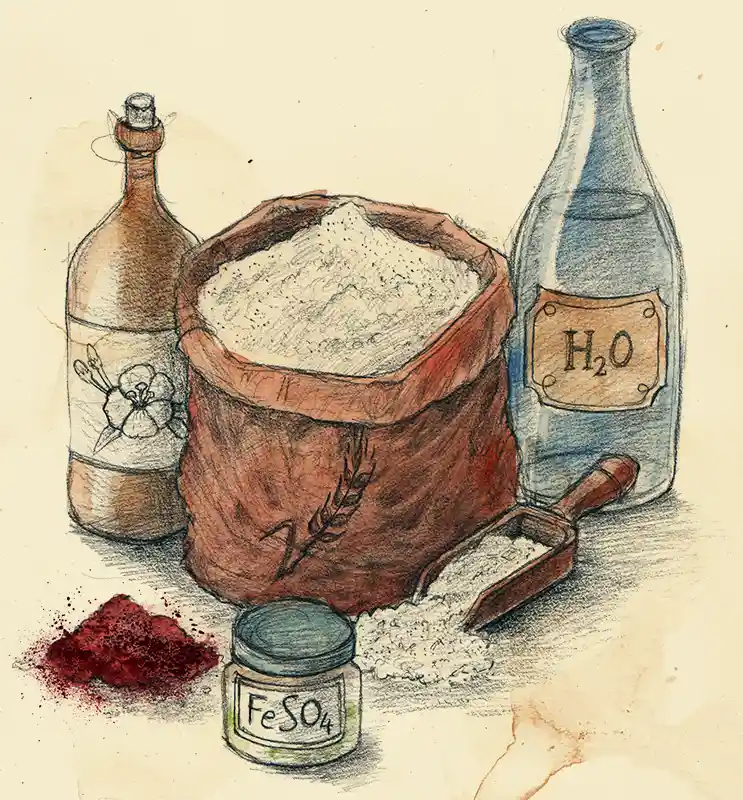
To obtain more transparent pigments, you can use sodium carbonate or wood ash lye instead of calcium carbonate. For the ash lye, add the equivalent of a large glass to the solution.
Refer to the end of this recipe to see the differences.
The objective of this step is to incorporate air into the previous preparation, which should foam and turn blue.
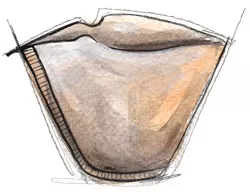
You have to take your time and wait for the preparation to flow from the coffee filter to prevent it from overflowing.
A blue paste will settle at the bottom of the filter; these are the future indigo pigments.
Be thorough!
If you don’t have a wash bottle, take a small bottle of water, poke a hole in the center of the cap, and then fill the bottle with the mixture of water and citric acid. Then, simply press the bottle to squeeze out the liquid.
This step can be sped up by microwaving the paste.
To avoid burning the pigment, you have to go gradually. Turn the microwave up to maximum power and run it for 2 minutes.
Check that the pigment does not burn and restart the microwave. And so on until the water has completely evaporated.

Indigo pigments extracted with calcium carbonate :


The color produces a fairly opaque blue.
Binder used: egg yolk

Indigo pigments extracted with sodium carbonate (washing soda):


The color gives a blue-gray hue. It is also somewhat more transparent.
Binder used: egg yolk